
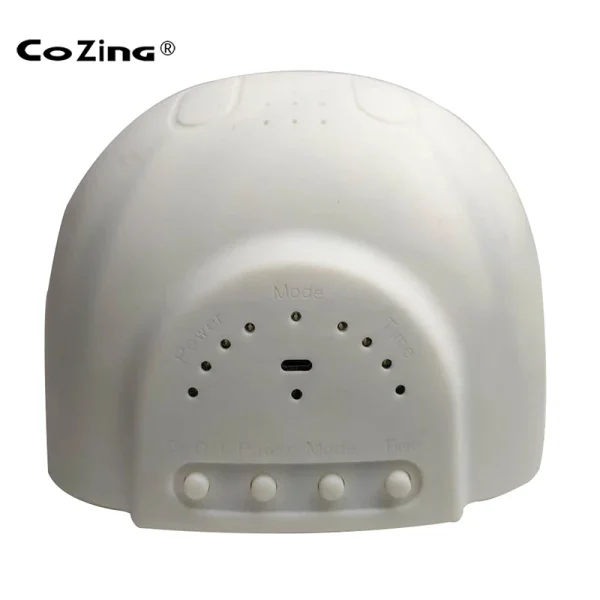
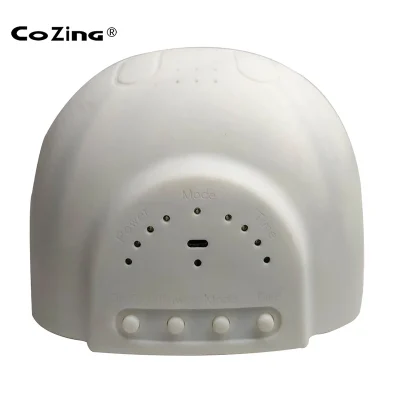

What are the indications of COZING-C320 laser photobiomodulation therapy ?
- Alzheimer’s disease (AD)
- Chronic neurodegenerative disease
- Neuronal damage, apoptosis, neuroinflammation
- Cognitive, executive and memory dysfunction in the brain
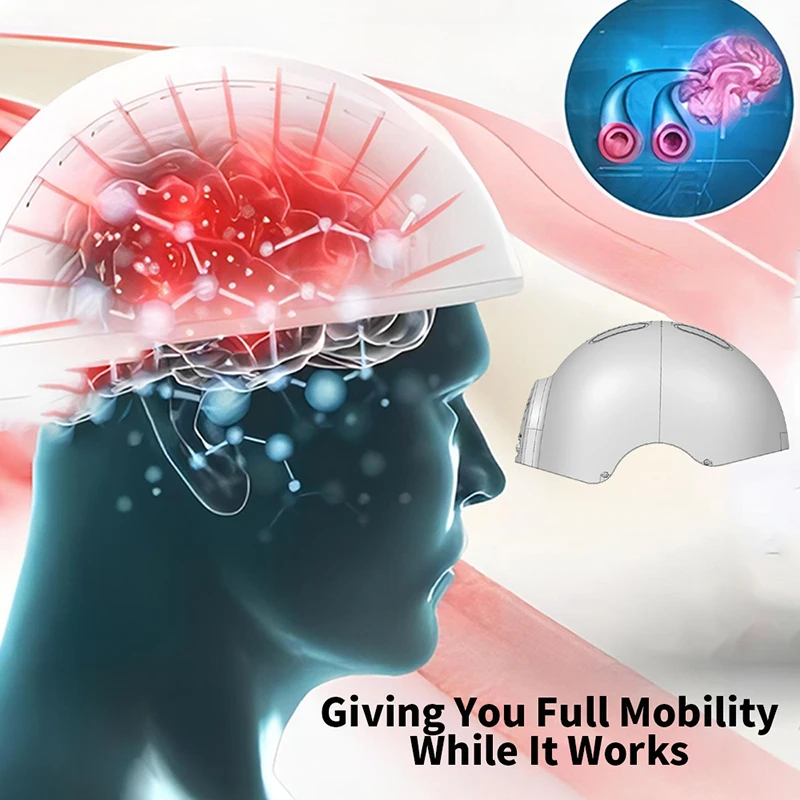
What’s the technical parameter of the COZING-C320 laser photobiomodulation therapy ?
|
Model name: |
COZING-C320 |
|
Number of diodes: |
320 LEDs [ODM is acceptable] |
|
Wavelength: |
1050nm LED [ODM is acceptable] |
|
Frequency: |
Adjustable from 1-20,000 Hz |
|
The default frequency setting: |
30Hz–the frequency data can not show on the display, but there are some buttons to adjust it. |
|
Duration: |
0-30 minutes adjustable |
|
LED intensity: |
Adjustable to 25%, 50%, 75%, or 100% (4 levels) |
|
Remote controller: |
wireless remote controller |
|
Total Max. output power : |
16W |
|
Single LED max. output power: |
50mW |
|
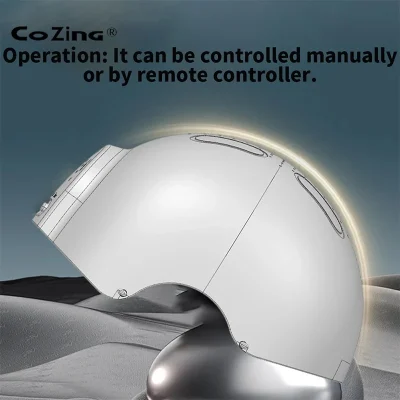
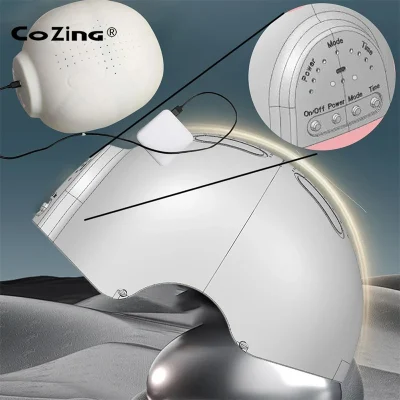
Operation: |
Can be controlled manually or via remote controller |
What are the advantages of COZING-C320 laser photobiomodulation therapy ?
1. Wavelength: 1050nm
2. Adjustable frequency range: 1~20,000 Hz
3.The default frequency is set to 30Hz. The frequency is not displayed, but it can be adjusted using buttons.
4. Duration: adjustable from 0 to 30 minutes
5. LED intensity: adjustable to 25%, 50%, 75%, or 100%, providing four levels of adjustment.
6. Wireless remote control
7. Total maximum output power: 16W
8. Maximum output power per LED: 50mW
9. Operation: Can be controlled manually or via remote control.
10.The helmet also with the nasal laser applicator &ear laser applicator(by remote controller controlled) , thus it can enhance the treatment efficiency effectively.

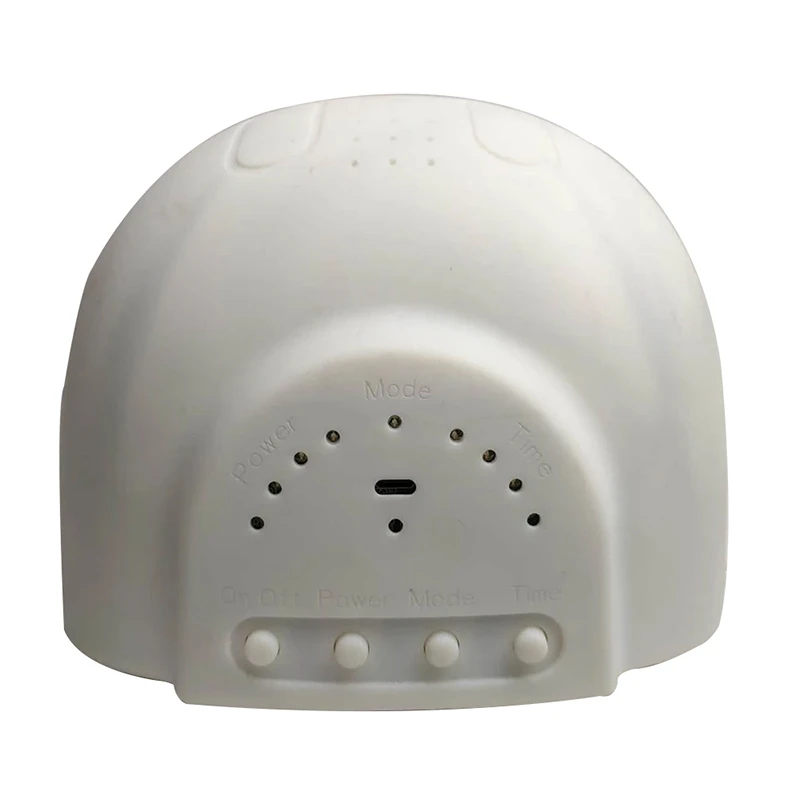
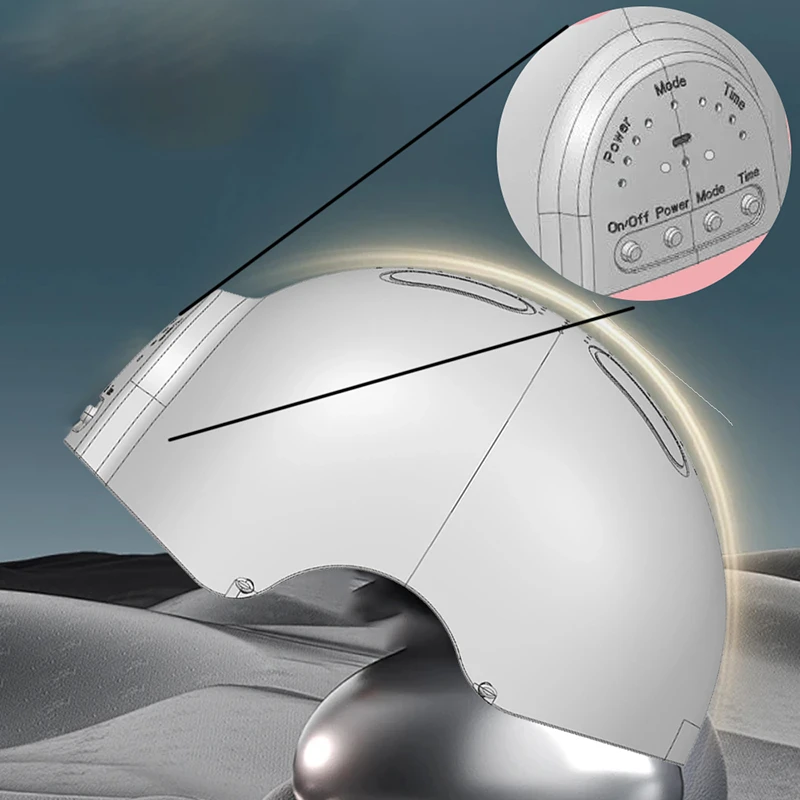
COZING-C320 laser photobiomodulation therapy Display:
How does COZING-C320 laser photobiomodulation therapy helmet work?
Near-infrared spectroscopy has been used on the head of human volunteers treated with a 1064 nm laser. They found that tPBM induced significant increases of CCO concentration (Delta [CCO]) andoxygenated hemoglobin concentration (Delta [HbO]) in the treated site as the laser energy dose accumulated over time.
NO is a major neuronal signaling molecule which, among other functions, possesses the ability to trigger vasodilation. To do so, it first stimulates soluble guanylate cyclase to form cyclic-GMP (cGMP). The cGMP then activates protein kinase G, leading to the reuptake of Ca2+ and the opening of calcium-activated potassium channels. Due to the subsequent fall in concentration of Ca2+, myosin light-chain kinase is prevented from phosphorylating the myosin molecule, causing the smooth muscle cells in the lining of blood vessels and lymphatic vessels to become relaxed . This vasodilation then promotes improved circulation, which in turn leads to improved cerebral oxygenation in a similar manner to that observed with pulsed electromagnetic fields .
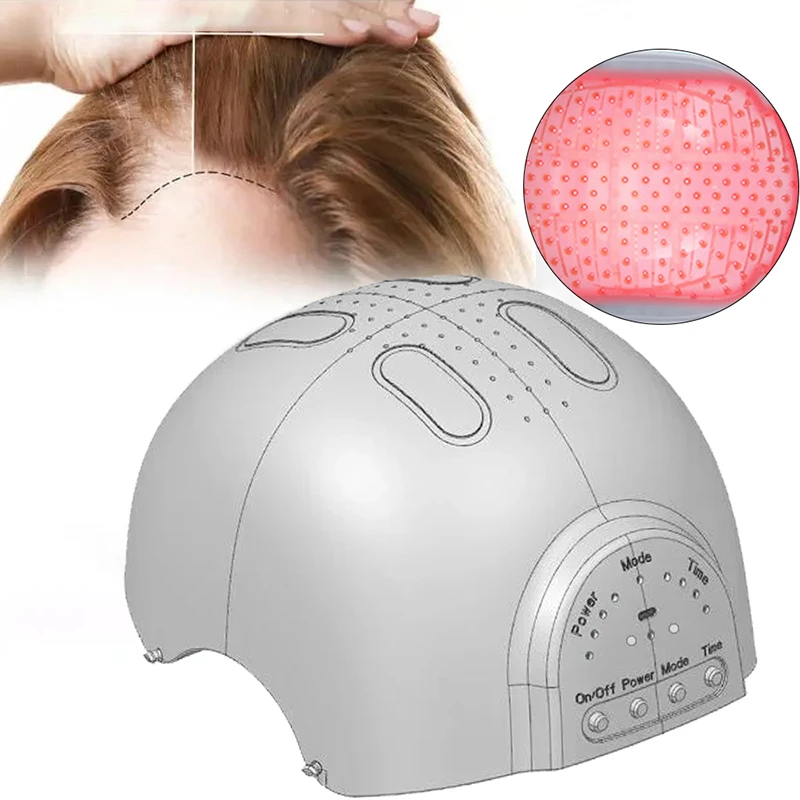
COZING-C320 laser photobiomodulation therapy Clinical study:
Alzheimer’s Disease (AD) and Photobiomodulation Therapy (PBMT)
Alzheimer’s disease (AD) is a progressive neurodegenerative disorder and the leading cause of dementia, accounting for about 60%–70% of all dementia cases. Clinically, AD is marked by cognitive, executive, and memory impairments, while pathologically, it is characterized by the abnormal accumulation of β-amyloid (Aβ) and hyperphosphorylated tau protein, leading to neurofibrillary tangles. These pathological changes cause neuronal damage, apoptosis, neuroinflammation, and brain function decline in AD patients. In China, the number of individuals affected by AD and related dementias surpassed 15 million in 2020, representing a quarter of the global total. Additionally, AD ranks as the 15th leading cause of death in the country. As the population ages, the impact of AD on daily life is becoming increasingly severe. Currently available treatments cannot halt the progression of AD, highlighting the urgent need for new drugs or alternative therapies.
Photobiomodulation Therapy (PBMT) in Alzheimer’s Disease
Recent research, including numerous basic studies and animal experiments, has demonstrated that PBMT can modulate neuronal and glial cell functions through various pathways, reducing Aβ plaque levels in AD animal models and providing neuroprotective effects to restore brain function. In 2018, Blivet et al. used the COZING-C320 device, which emits photonic and magnetic fields, to perform cranial and abdominal irradiation on an AD mouse model injected with Aβ25-35 protein in the hippocampal region. After eight consecutive days of 10-minute daily irradiation with a pulse frequency of 10 Hz, the AD mice showed improvements in memory and spatial cognition. Additionally, levels of Aβ1-42 and phosphorylated tau proteins decreased, while oxidative stress and neuroinflammation were suppressed.
In 2019, Tsai et al. found that stimulating AD mice with 40 Hz pulses of visual and auditory signals significantly reduced amyloid plaques in their brains and enhanced cognitive function. Later that year, the team further elucidated the mechanism, revealing that 40 Hz light and sound signals increased gamma wave frequency in crucial brain regions, alleviated synaptic dysfunction, reduced microglial inflammatory response, and improved spatial learning and memory abilities. However, a recent study by Buzsáki et al. yielded controversial results, showing that 40 Hz white light had minimal effect on gamma rhythms in the visual cortices of AD mouse models, with no significant changes in plaque count or microglia morphology observed through immunohistochemistry or in vivo two-photon imaging. Additionally, measuring the electrical activity of APP/PS1 mice indicated that 40 Hz light or sound stimulus had little impact on deeper brain regions, affecting only 7% of hippocampal neurons.
Conclusion
This negative study suggests that native gamma oscillations and steady-state oscillations induced by 40 Hz sensory stimulation might be distinct neurophysiological phenomena. Therefore, replication studies are needed to further investigate the cognitive benefits of PBMT and 40 Hz stimulation in AD mouse models and extend these findings to clinical studies in human subjects.
FAQ