
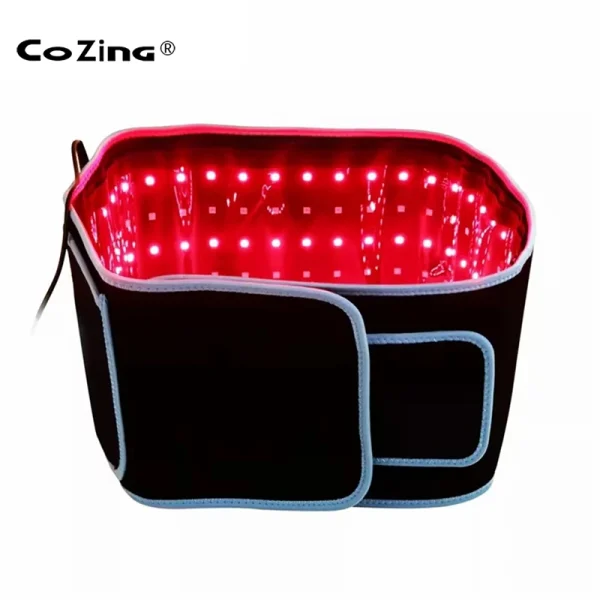
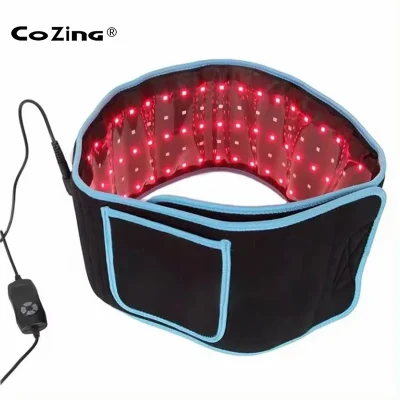
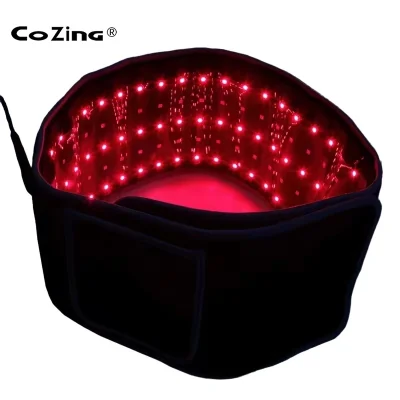
What are the indications of COZING-LRB01 led at home light therapy?
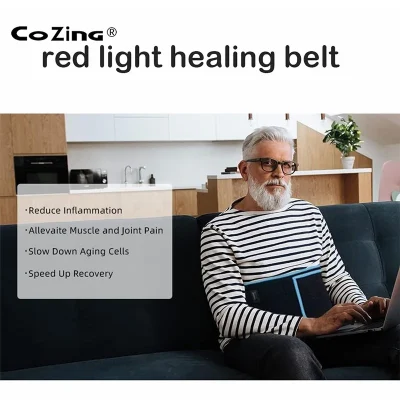
- Acute injuries to the back, arm or waist
- Ligament sprains, or contusions
- Accelerate healing and reduce pain
- Reduce pain in the muscles and joints and increase blood circulation.
- Stimulate regeneration of skin and blood cells in areas exposed to the red rays.
- Heal wounds more quickly
- Accelerate healing in bones and joints
- Treat arthritis & reduce inflammation in the joints
What’s the technical parameter of the COZING-LRB01-led at-home light therapy?
|
Model number |
COZING-LRB01 |
|
Product name |
Red light healing belt |
|
No. of LED Chips |
140*3*0.2w |
|
Net Weight |
0.4KG |
|
Wavelength |
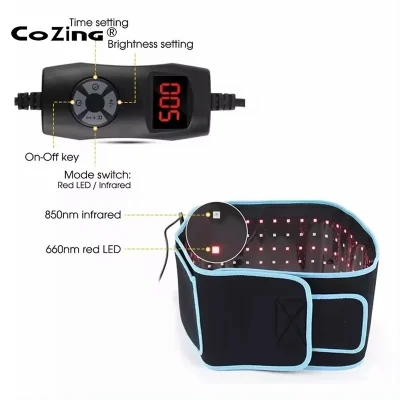
660nm+2pcs×850nm |
|
Timer |
5/10/15/20/25/30 mins |
|
Material |
Fabric |
|
Lifespan |
Over 50,000 Hours |
|
Rating Power |
45W |
|
Actual Power |
25W |
|
Led Diode |
105 pcs |
|
Instrument classification |
Class II |
What are the advantages of COZING-LRB01led at-home light therapy?
1. Safe Material and Easy to Carry: The red light therapy pad is embedded with 105pcs powerful LEDs.Making it beneficial for bones, joints, and deep muscle recovery problems.
2. The therapy pad is made of TPU and Neoprene material, has no smell, and is skin-friendly.
3. Arm wrap size: 57cm * 13cm, long enough for most people’s needs and lightweight, easy to carry.
4. The red light healing belt is washable after taking out the LED pad.
5. The Usb port of the infrared belt is suitable for mobile power banks, computers, and laptops.
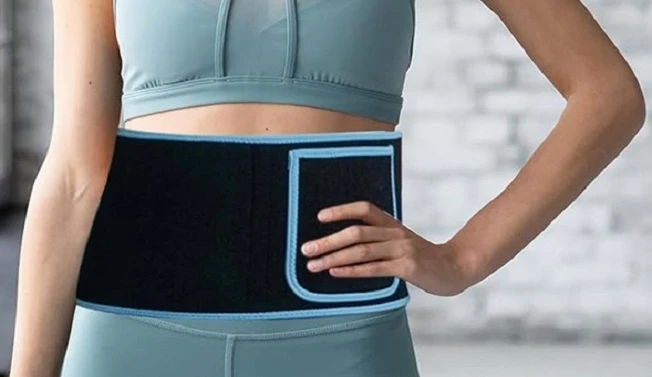
How does COZING-LRB01 led at home light therapy work?
Light therapy works by targeting the cellular origins of arthritis. Cells absorb the red and near-infrared wavelengths (600-890nm) and turn that light energy into chemical energy through a response commonly known as Photobiomodulation. Research has proven that red and near-infrared light increases the production of Adenosine Triphosphate (ATP), often referred to as the energy currency of the cell. This increase in adenosine triphosphate production results in more energy for the cell to perform more efficiently and repair damage. After exposure to the specific wavelengths, Nitric Oxide (NO), frequently called the ‘miracle molecule’, is triggered and released. Nitric oxide is the body’s natural vasodilator which widens blood vessels and capillaries.
After just 20 minutes of light therapy, blood flow is increased to nerves and other tissues, and this boost lasts for several hours circulating anti-inflammatory and restorative proteins throughout the body. To receive the maximum benefit from red light therapy treatments, applying the appropriate dosage is essential. A greater dose is required to stimulate deeper tissue whereas the dermis and epidermis require less. To ensure penetration to the joints it is essential that wavelengths fall within the therapeutic range of 620nm to 660nm for red and 800nm to 850nm for near-infrared.
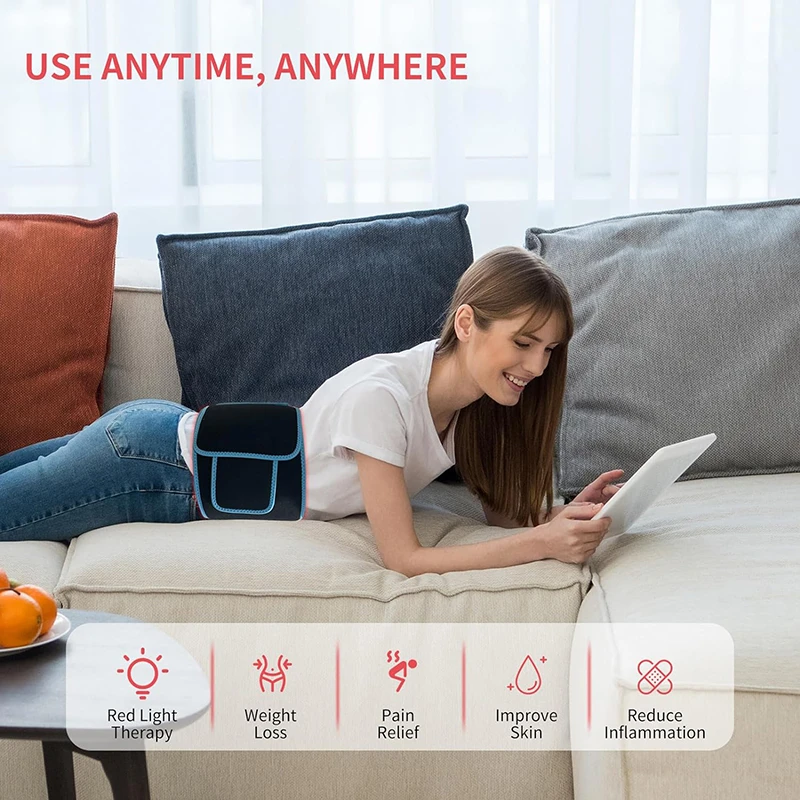
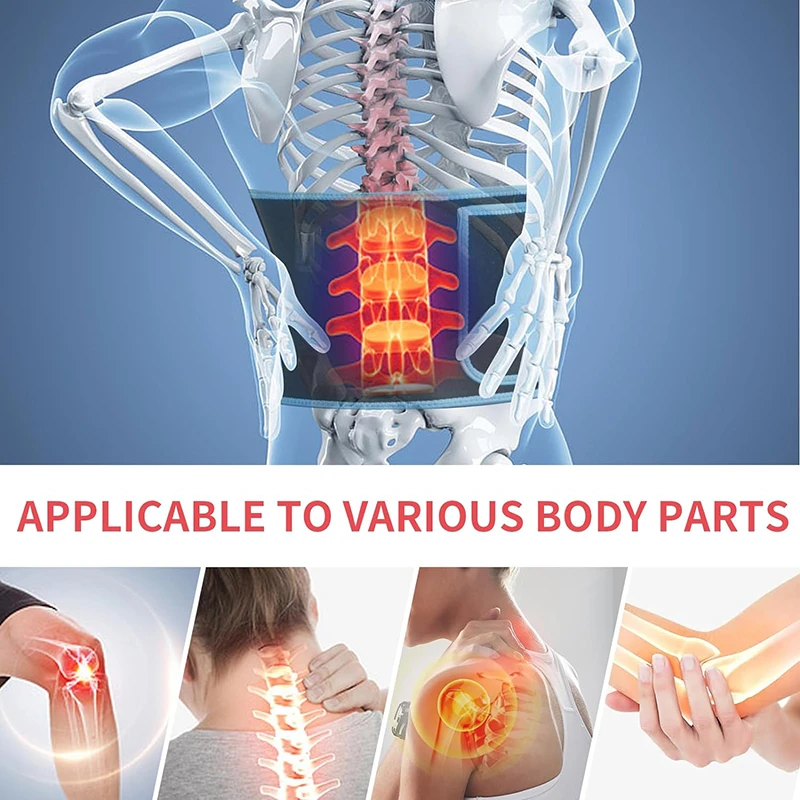
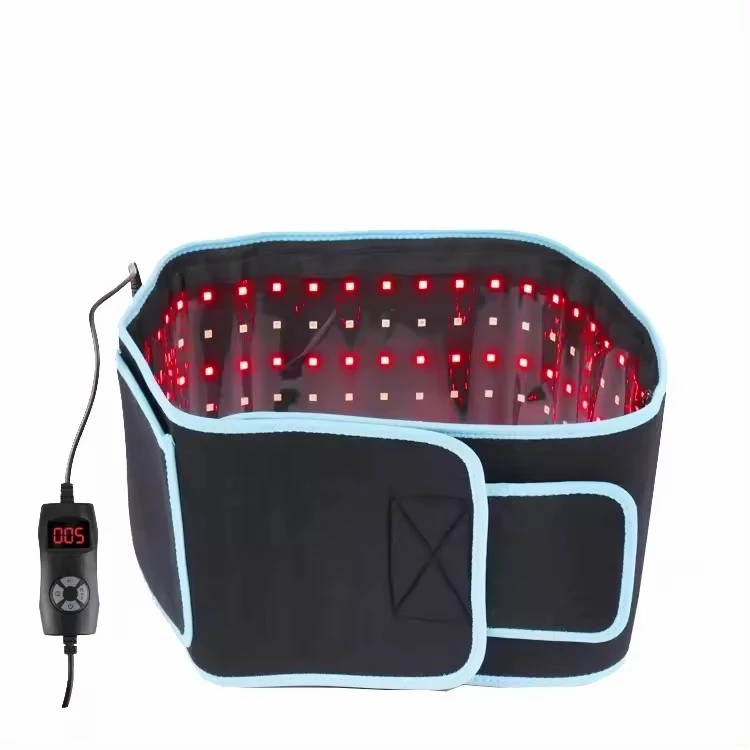
COZING-LRB01led at home light therapy Display:
COZING-LRB01 led at home light therapy Clinical study:
Study Overview
A prospective clinical study was conducted to demonstrate the effects of various treatments on second-degree ankle sprains in soccer players. Forty-seven players were randomly assigned to one of three groups. Group one (n = 16) received standard initial care (RICE-rest, ice, compression, elevation). Group two (n = 16) was given RICE along with a placebo laser treatment. Group three (n = 15) received RICE combined with an 850-nm diode laser treatment. The volume of edema was measured before the treatment and at 24, 48, and 72 hours post-treatment. Analysis using a three-by-three repeated measures ANOVA followed by a post hoc test indicated that the group receiving RICE and the 850-nm infrared light therapy showed a statistically significant reduction in edema volume at all measured intervals compared to the RICE-only group.
Kumar conducted a comparative study involving 50 patients with ankle inversion injuries. His findings suggested that patients treated with infrared (IR) therapy experienced faster symptom resolution and an earlier return to full weight-bearing activities compared to those receiving standard physiotherapy.
Another extensive clinical study involved 74 patients with injuries to various anatomical locations including the ankle, knee, Achilles tendon, epicondyles, shoulder, wrist, and interphalangeal joints of the hands. All patients underwent surgical procedures prior to IR light treatment. The study revealed that the healing process was significantly faster (by 25%-35%) in patients treated with IR light compared to those who did not receive this treatment.
Additionally, a review of nine placebo-controlled trials assessing pain and range of motion in tendinopathies found an average improvement of 32% in patients treated with IR therapy over those who were not.
Conclusion
As sports activities increase across all age groups, resulting in a higher incidence of sports injuries, clinicians require more effective treatment options. Infrared light therapy is poised to gain popularity due to its proven efficacy and broad application. Non-invasive and drug-free treatments like IR therapy offer valuable alternatives for clinicians seeking to expand their treatment repertoire.
FAQ