
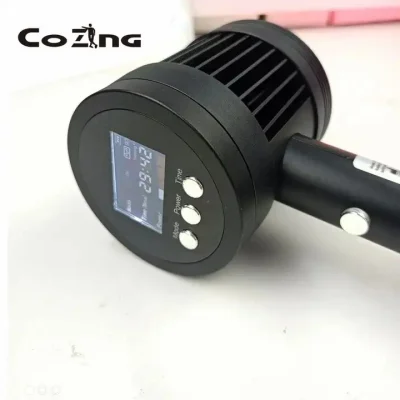
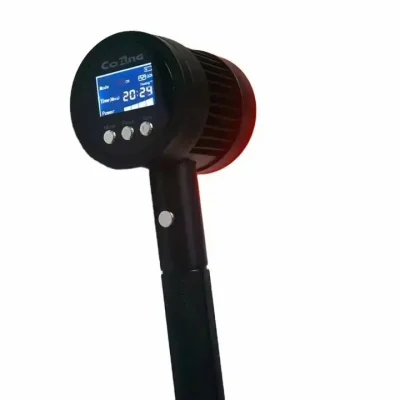
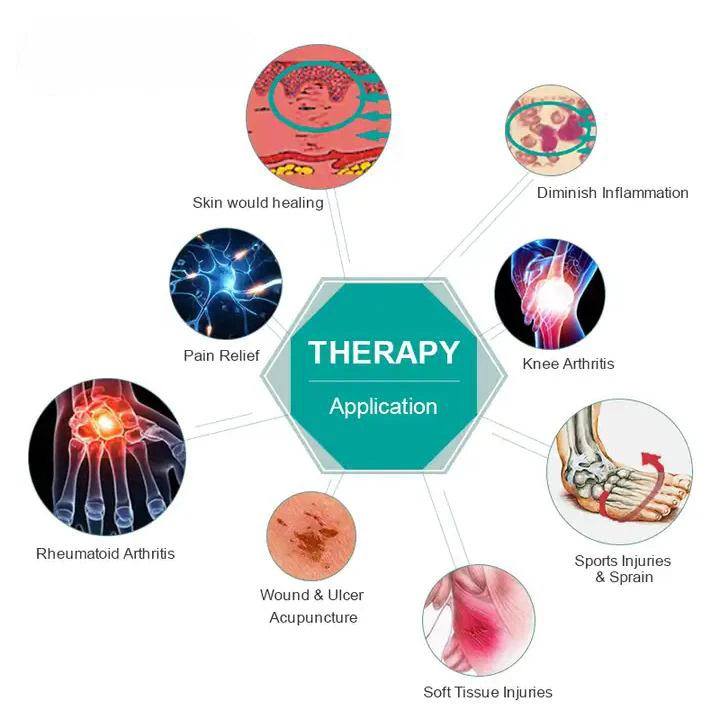
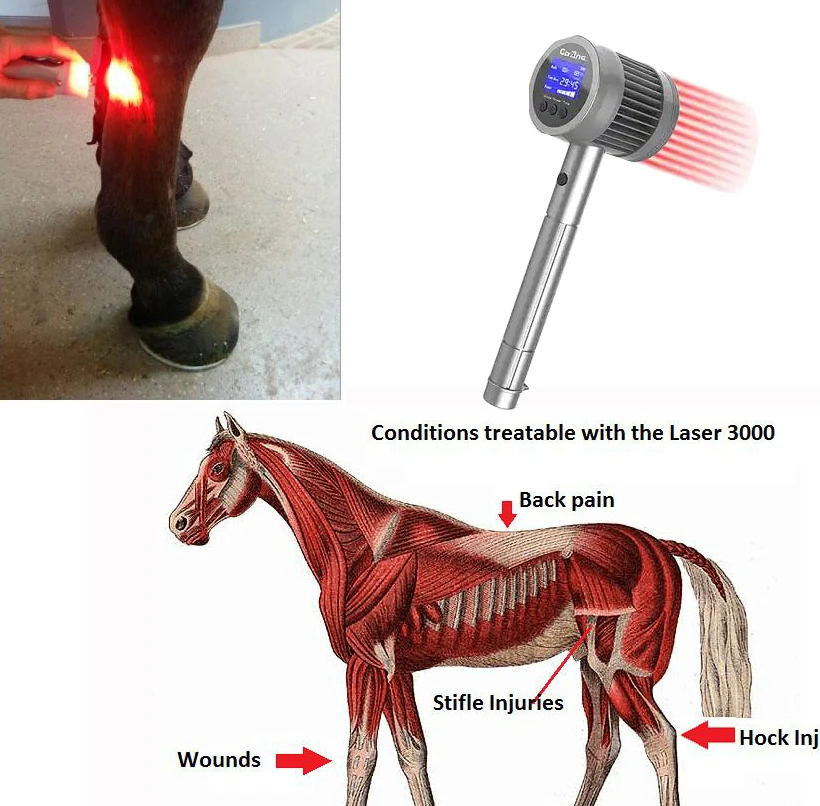
What are the indications of the equine laser therapy?
- Gingivitis
- Stomatitis
- Wound
- Sinusitis
- Hock Injuries
- Acute & Chronic OtitisArthristis
- Cystitis
- Stifle Injuries & Osteoarthritis
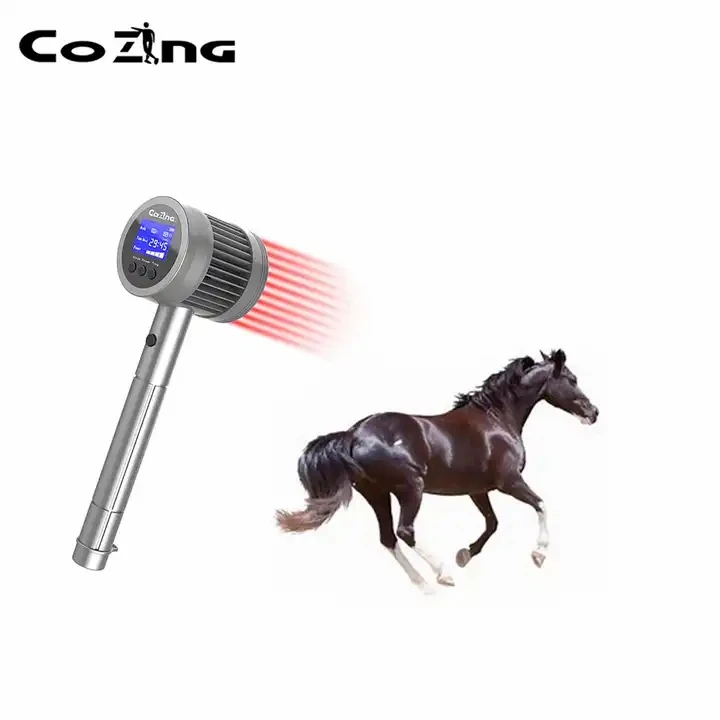
What are the technical parameters of equine laser therapy?
|
Model |
Wavelength |
Max. Output |
|
COZING-T05 |
808nm+650nm |
1200mw |
|
COZING-T05-1 |
808nm+650nm |
2W |
|
COZING-T05-2 |
808nm+650nm |
3W |
|
COZING-T05-3 |
808nm+650nm |
4W |
|
COZING-T05-4 |
808nm+650nm |
5W |
|
COZING-T05-5 |
808nm+650nm |
6W |
|
COZING-T05 (Rental) |
808nm+650nm |
1200mW |
|
COZING-T05P1 |
650nm+904nm |
25W |
|
COZING-T05P2 |
650nm+904nm |
75W |
|
COZING-T05-6 |
808nm+650nm |
7W |
|
COZING-T05-8 |
808nm+650nm |
9W |
|
Customized |
830nm/904nm/650nm/450nm/660nm/808nm |
100mw-75w as the customiz |
|
COZING-T05 Technical Parameters |
|
|
Battery Capacity: |
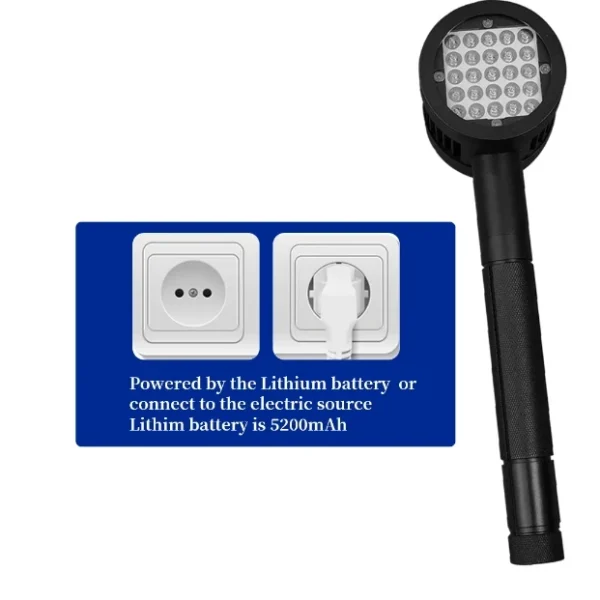
Built-in lithium battery 5200mAh |
|
Terminal Laser output: |
6 laser beams with 808nm,19 laser beams with 650nm |
|
Voltage: |
110-240V,50-60 Hz |
|
Working Mode: |
Pulse mode and continuous mode |
|
Time Setting: |
Start from 1 minute,1-60 minutes, adjustable |
|
Adapter: |
Europe America standard |
|
The Max. |
output:1295mW |
|
Display: |
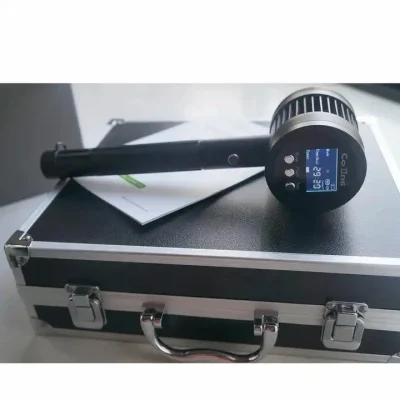
Gray LCD display |
What is the advantages of the COZING-T05V?
①Equipment maintenance is easy
②LED display
③Handheld
④ Timing and adjustable power
⑤Large battery capacity
⑥Customizable wavelength
What is the principle of cold laser therapy for dogs working?
① COZING-T05V Focus on the convergence and integration of laser technologies for chronic spinal pain, Animal pain relief, wound healing, sprains/strains, and other chiropractic applications.
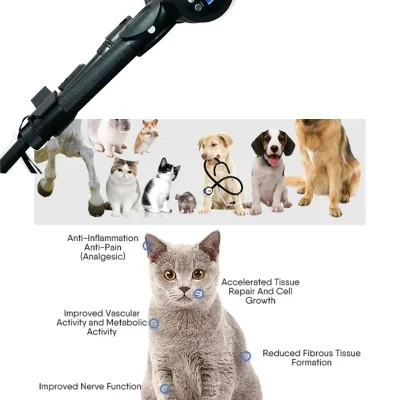
② 808nm is the longer wavelength high-power laser, it is best suitable to treat deeper tissue, tendons, and ligaments. Because it produces the maximum interaction with mitochondria, speeds up the metabolism of various tissues, repairs cells, and accelerates the production of collagen fibers, deposition, and cross-linking.
650nm 808nm and 904nm is optional.
③ By illuminating the tissue of the affected area, the laser beam produces the bio-stimulation effect to act on the body so that the tissue can absorb light energy and relieve pain.
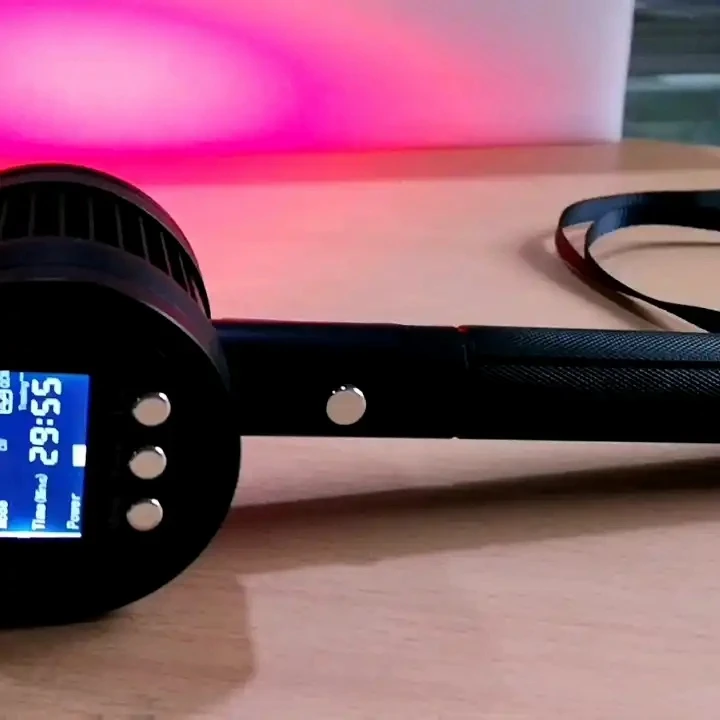
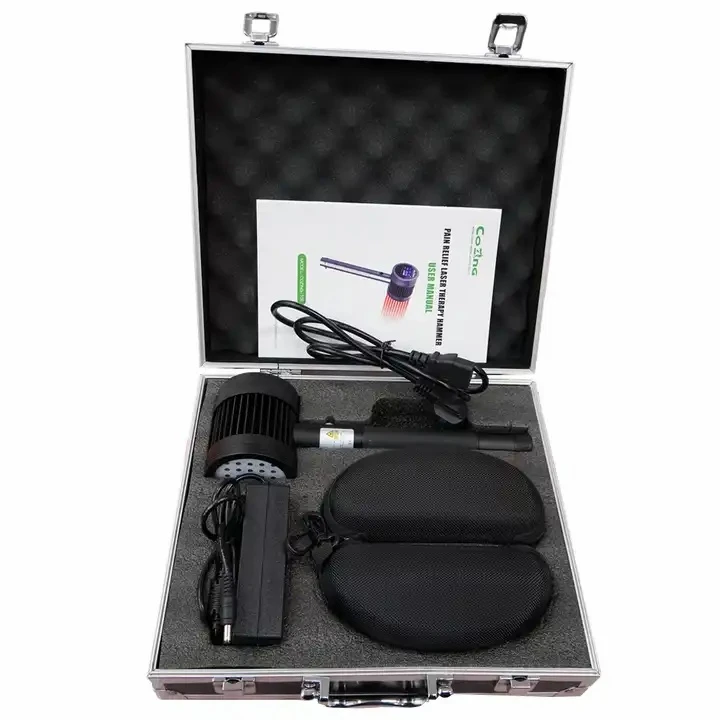
Product Display:
Clinical application:
Class IV laser therapy offers promise for improved healing
The chances for recovery from tendon and ligament injuries that were once career-ending are improving, thanks to a wide range of regenerative therapies brought from human medicine into equine rehabilitation. However, tendon healing still takes a long time, and the re-injury rates remain high.
Physiotherapists have been using laser therapy technology in people for nearly 40 years. It has become a routine part of treatment to provide pain relief and healing in humans and is increasingly used to encourage healing in horses.
Martha Rodgers, VMD, owner of Shephard Hill Equine, in Lexington, Kentucky, uses a Class IV laser regularly to treat muscle injury or soreness, tendon and ligament injuries, and wounds. In one recent case, a Thoroughbred sales yearling had a 30-by-40-centimeter (almost 12-by-16-inch) laceration to his pectoral area two months before a sale. The triangle-shaped flap of skin was devitalized and had to be excised. Just four days after the injury Rodgers began a series of high-power laser treatments.
“Within three weeks the wound was nearly healed,” she says. “It had reduced to a 10-by-10-centimeter area that was rapidly epithelializing and contracting, and he successfully went into the sale with only a small scar.
“When it comes to wound healing, the earlier in the process Class IV laser treatment is started the more profound the healing,” she adds.
When researcher Mathilde Pluim, PhD, a faculty member at Ghent University, in Belgium, first encountered high-power laser therapy in horses, little concrete data on the therapy existed, and the evidence at that point was clinical (i.e., not yet supported by controlled, peer-reviewed published research) and anecdotal. She and other researchers are committed to changing that. Recent study results are confirming high-power laser therapy significantly improves short- and long-term healing of tendon and ligament lesions, creating an exciting option for treating these soft tissue injuries.
“For equine orthopedics, it is interesting to explore therapeutic options … that were already successfully being applied in human orthopedics,” she says.
FAQ