
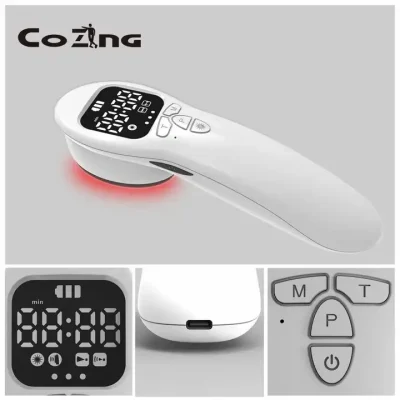
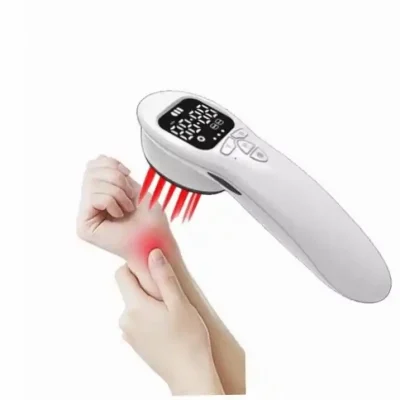
What’s the indications of the laser treatment for arthritis in dogs?
- Arthritis, OsteoarthritisRheumatoid ArthritisFibromyalgia
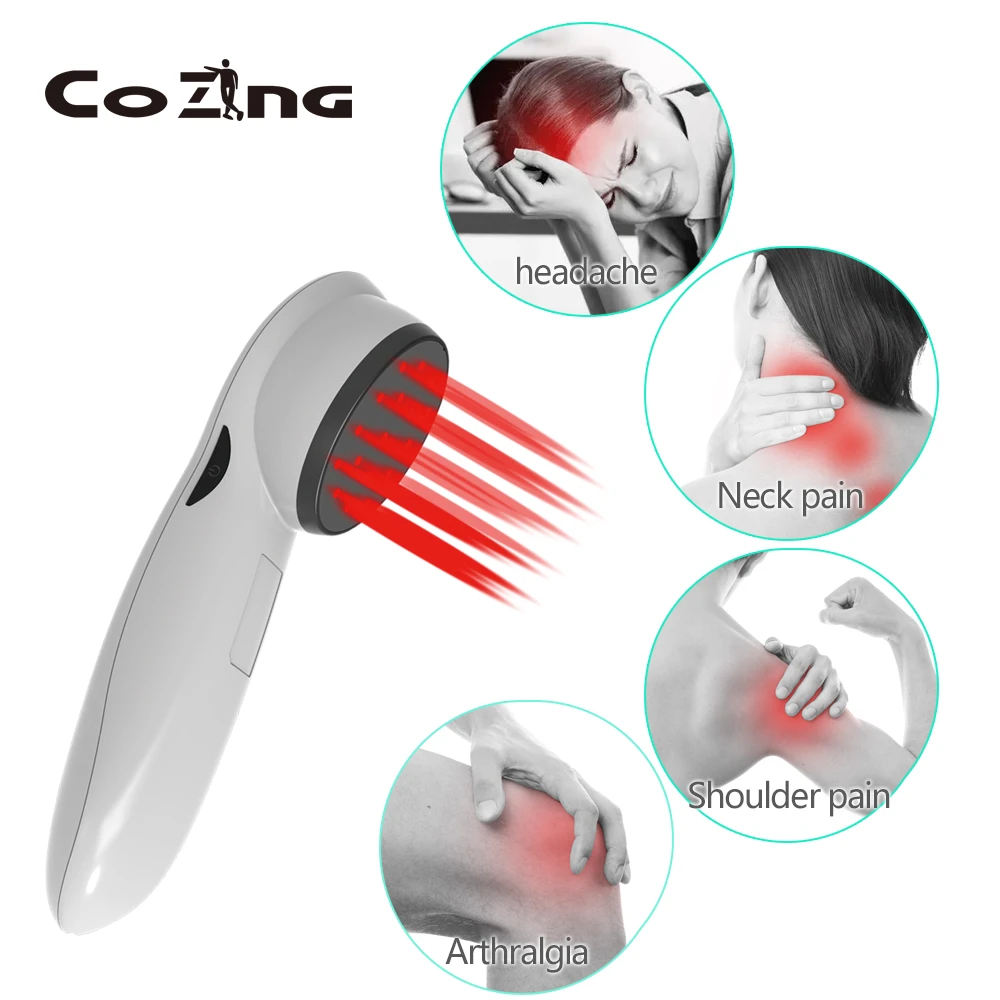
- Acute and Chronic Painlnflammation,SwellSoft Tissue InjuriesWounds,Swell
- Muscle/Ligament StrainTendonitis,Tennis ElbowSciatica,Neuropathic Pain
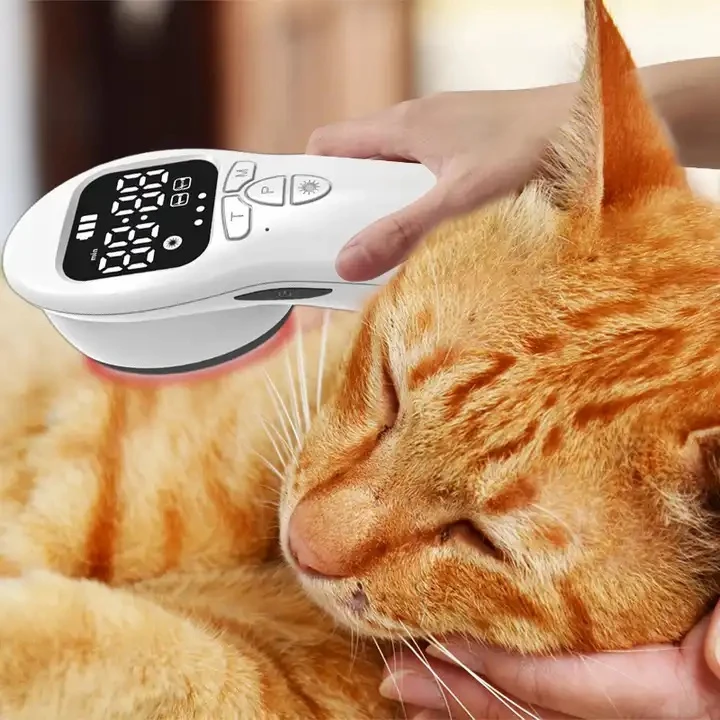
What’s the technical parameter of the laser treatment for arthritis in dogs ?
|
Technical Specification |
|
|
Battery capacity |
built-in lithium battery 5600mAh |
|
Laser wavelength |
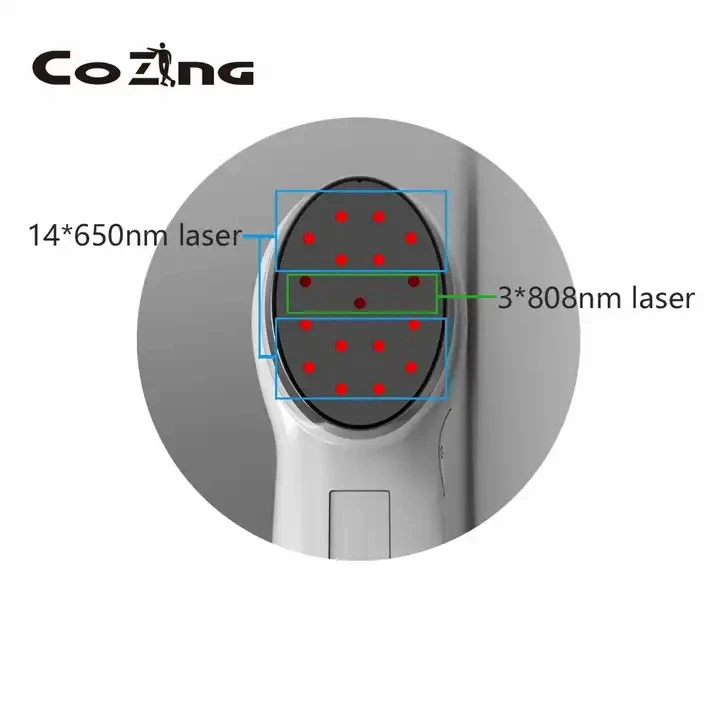
808nm±20nm and 650nm±20nm |
|
Terminal laser output |
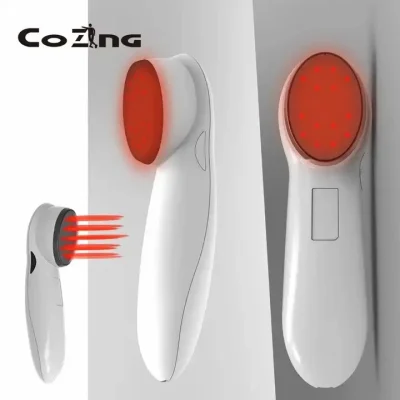
3 laser beams with 808nm, 150mw each laser beam, invisible output 14 laser beams with 650nm, 5mW each laser beam, visible output |
|
Customized |
can be customized as the LED light therapy or the comb, the different wavelength and power intensity is accepted, if you have the customized requirements, pls contact us directly. |
|
Case Material |
ABS |
|
Lens Material |
tempered glass |
|
Working mode |
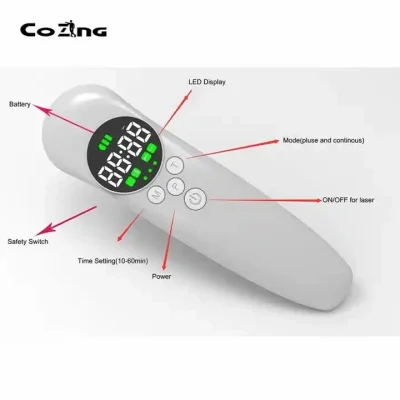
Pulse and continuous mode adjusted by self |
|
Time setting |
15-60 minutes, 10 grades adjustable, each grade increase 5 minutes ( 15mins, 20mins, 25mins, …, 50mins, 55mins, 60mins ) |
|
Output power |
170mW, 340mW, 510mW optional |
what is laser treatment for arthritis in dogs working Principle?
①Pain Relief: “Laser decreases nerve sensitivity by decreasing bradykinin; a pain eliciting chemical. It normalizes ion channels[cellular gatekeepers] and releases endorphins [body’s natural pain reliever] and enkephalins [related to endorphins] that produce an analgesic effect. It also has a pain-blocking effect on certain nerve fibers.”
②Anti-inflammatory/Healing: “Laser increases ATP, which is stored energy [ATP is the acronym for adenosine triphosphate]. This increased energy accelerates the repair processes of the cell. Laser also causes a widening of the arteries and veins around the injury which helps to remove damaged cellular debris and increase nutrients and oxygen. White blood cell activity is enhanced leading to a more rapid repair process.
③Accelerated Tissue Repair and Cell Growth: “Photons of light from lasers penetrate deeply into tissue and accelerate cellular reproduction and growth. As a result of exposure to laser light, the cells of tendons, ligaments, nerves and muscles are repaired faster.”
What is the advantages of the COZING-T03?
①The device can work with power connection while battery dies
②US/EU plug standard. 4 hours on a full charge.
③170mW, 340mW, 510mW optional
④Three grade for adjustment
⑤Gray LCD display
clinical:
Over the past decade, there has been increasing interest in nonpharmacological treatments for human and canine osteoarthritis. Among these therapies, electroanalgesia technology has attracted great interest from human physicians and veterinarians.
In human medicine, the most promising electrical analgesic technology for the treatment of osteoarthritis is that using lasers. Over the past decade, both low-intensity laser therapy (LLLT) and high-intensity laser therapy have been used to treat OA-related pain in humans without side effects. High-intensity laser therapy was first introduced in 2011, and a recent systematic review, including the first six studies in humans, found that it was effective in reducing pain and improving function in people with knee OA. Regarding the veterinary literature, a trial in 12 dogs investigated the effect of LLLT on bone healing and acute surgical pain after tibial plateau leveling osteotomy (TPLO), but the results were disappointing. To the authors’ knowledge, only one study of 20 dogs with elbow OA reported successful laser treatment of chronic pain associated with canine OA.
The purpose of this retrospective study was to investigate the clinical effectiveness of LLLT in a client-owned population, including improvements in quality of life as perceived by animal owners and reductions in pharmacologic analgesic treatment as determined by the primary clinician. Dogs diagnosed with osteoarthritis and exhibiting pain.
No side effects of laser treatment were observed at any time in any of the research dogs.
The most relevant finding of this study is that laser therapy is effective in improving dog owners’ perceived quality of life and also helps reduce the use of systemic analgesics. Interestingly, these positive effects were seen immediately after the first laser treatment and were enhanced by repeated treatments over the 8-week study period.
Packaging & Delivery
|
1 |
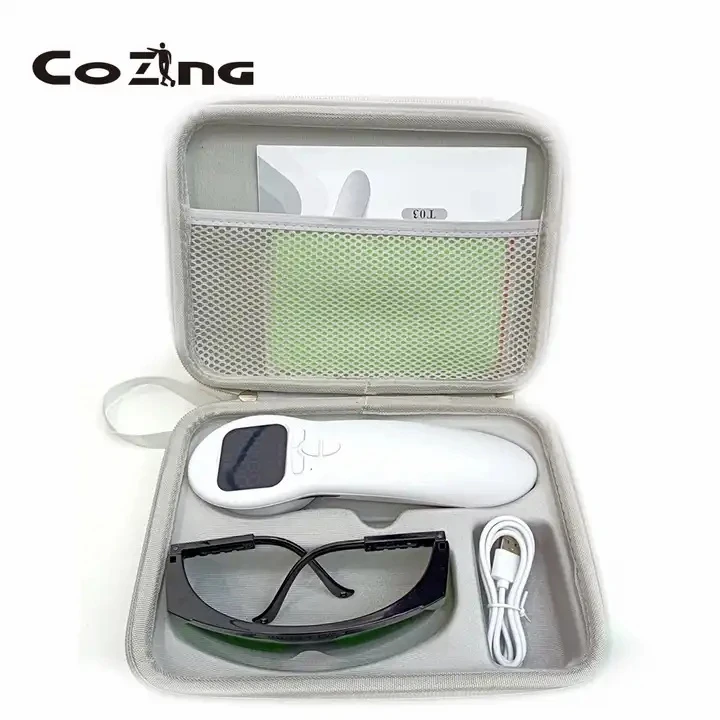
1x Pain relief low-level cold laser device |
|
2 |
1x USB charging cable |
|
3 |
1x Zipper carry case |
|
4 |
1x Manual |
|
5 |
1x Warranty card |
|
6 |
1x safety glasses with case |
Product Display:
FAQ