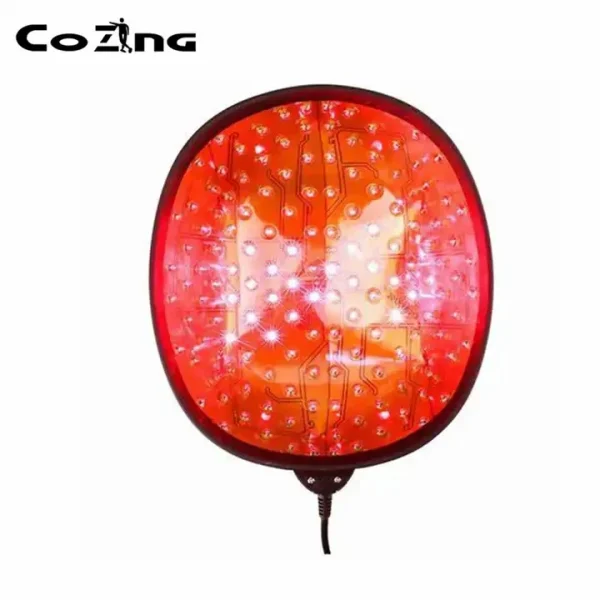
What’s the technical parameter of the Laser Cap for Hair Growth?
|
Brand |
COZING |
|
Model |
COZING-C96 |
|
Number of terminal laser output |
678 nm±20nm |
|
Application |
5000 mAh /4.5Hz |
|
Product Name |
red light helmet for hair loss |
|
Default treatment time |
20mins |
|
Certificate |
CE |
|
Instructions |
for people with baldness and hair loss |
|
Relative humidity |
<80% |
|
Atmospheric pressure |
86kpa-106kpa |
How does the Laser Cap for Hair Growth work?
Low-intensity light, called low-level laser therapy (LLLT), stimulates cell activity in tissue. It is associated with a range of wavelengths from red to infrared lasers to promote tissue repair and regeneration. The overall effect of LLLT on the body is called photobiomodulation. [ 1 ] The “optical window” of biological tissue is approximately 650-1200 nm. Tissue penetration is greatest at these wavelengths, so red or near-infrared light (600–950 nm) is used in LLLT. [ 2 , 3 ] LLLT has been reported to stimulate hair growth in men and women with androgenic alopecia (AGA)) and was approved by the US FDA in 2007. It is thought to stimulate the re-entry of telogen follicles (HF) into the anagen phase, prolong the duration of the anagen phase, and increase the proliferation rate of active anagen HF. Additionally, it helps promote repair regeneration that occurs during wound healing, as well as physiological regeneration that occurs during the hair cycle, which relies heavily on cell proliferation. These laser actions may normalize the physiological regeneration of scalp HF affected by various hair loss disorders such as male and female AGA, alopecia areata (AA), and chemotherapy-induced alopecia.
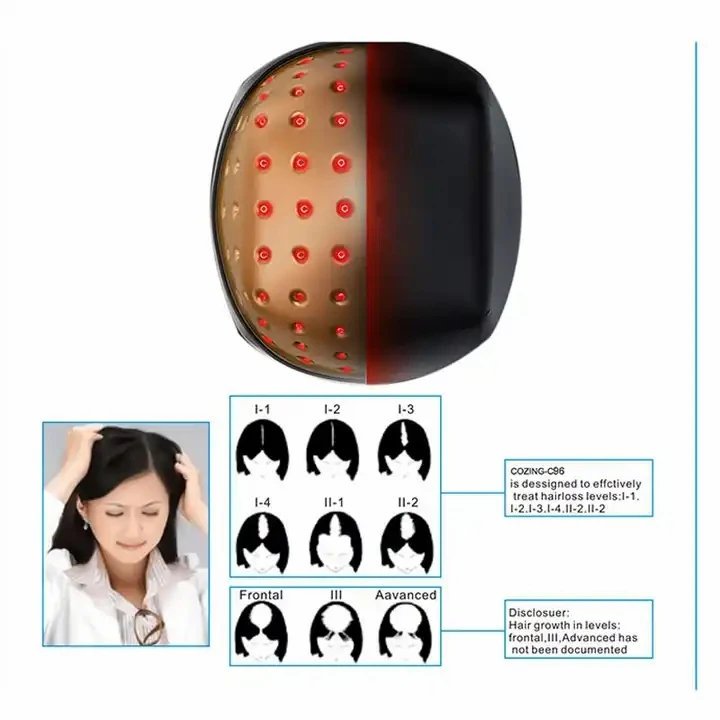
What are the functions of red light helmet for hair loss?
① Promote hair follicle growth: Laser cap can promote the growth and development of hair follicles by irradiating the scalp with low-energy laser. Research shows that laser irradiation can increase the cell activity of hair follicles, increase the blood supply and nutrient supply to hair follicles, thereby promoting hair growth.
② Increase hair density: The use of laser cap can increase the density of hair and make the hair look thicker. Laser irradiation can stimulate the blood circulation of the scalp, increase the supply of oxygen and nutrients to the scalp, help improve the scalp environment, thereby promoting hair growth and increasing hair density.
③Slow down the process of hair loss: The use of laser cap can slow down the process of hair loss. Studies have found that laser irradiation can reduce hair loss caused by excessive sensitivity and inhibit hair thinning and loss.
④ Improve scalp health: The use of laser cap can improve the health of the scalp. Laser irradiation can promote blood circulation in the scalp, increase the supply of oxygen and nutrients to the scalp, help improve the health of the scalp, and reduce problems such as dandruff, inflammation, and itching.
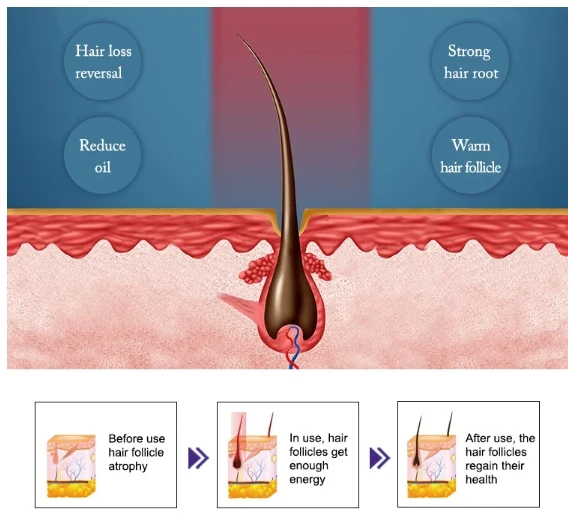
Summary of LLLT studies on hair growth efficacy:
Result analysis studies show that LLLT is safe and has certain efficacy in treating AGA. At least half of the studies showed improved hair regeneration in study subjects, as evidenced by increased hair count, increased hair density and tensile strength, and prevention of hair loss. While early trials were smaller and lacked controls, more recent trials are larger, better designed, and have more effective control groups, thus increasing effectiveness. All studies show that repeated LLLT treatments improve AGA over time. In the largest randomized controlled trial, Jimenez et al. Statistics of terminal hair counts in all patients showed that hair regeneration was statistically significant. The HairMaxLaserComb® device was tested on men and women and compared to a sham control group. Esmat et al. demonstrated the efficacy of LLLT when combined with finasteride and minoxidil, thus suggesting that combination therapy may be useful. This study also shows that LLLT and minoxidil have similar efficacy in hair growth, and that the combination treatment is even more effective.
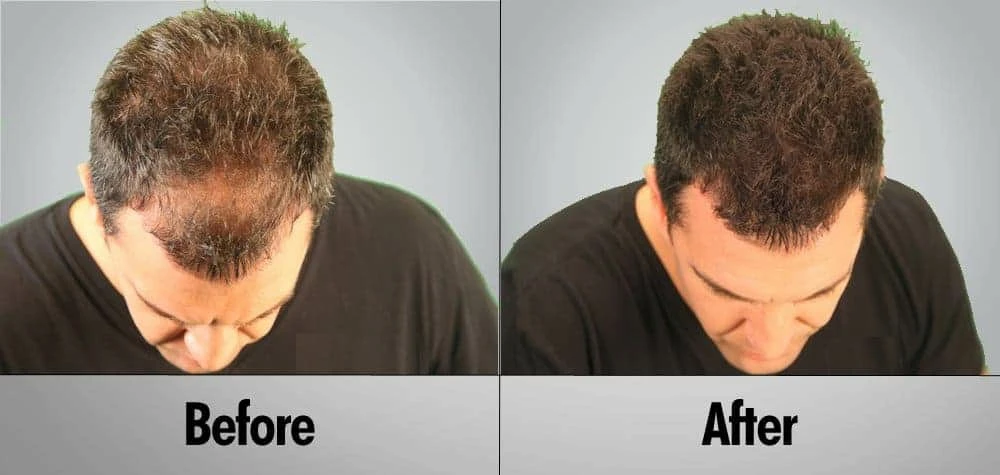
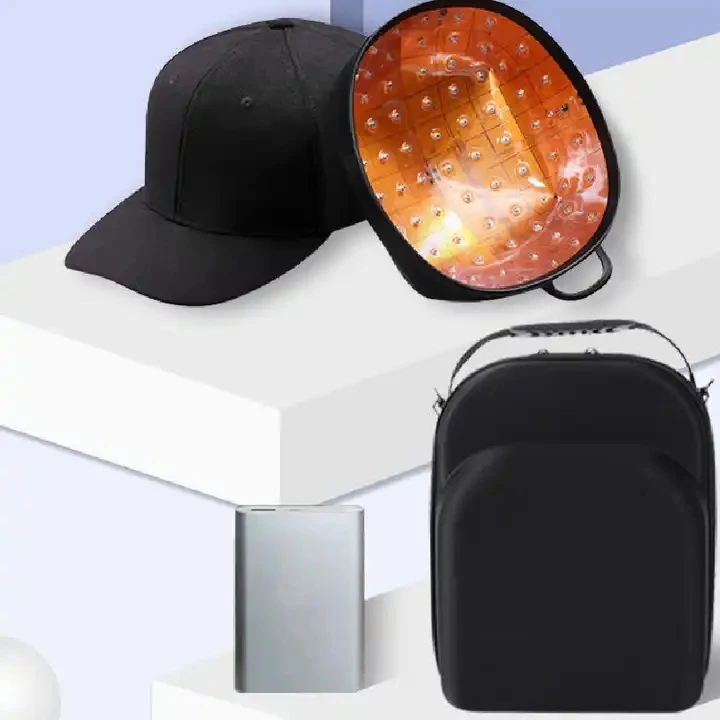
Product Display:
FAQ