
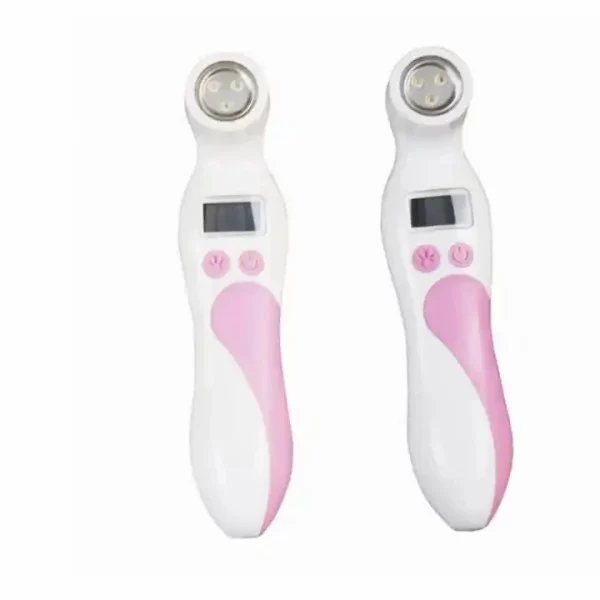
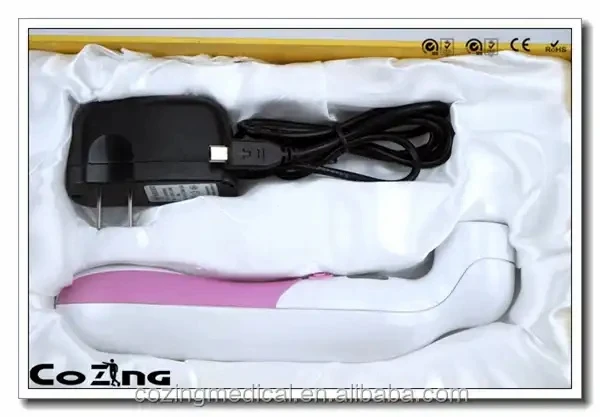
What is the COZING-XS01 female breast light screening device detectable diseases ?
①Breast hyperplasia
②breast fibroadenoma
③acute/chronic mastitis
④ breast cancer ect.

What’s the technical parameter of the Breast cancer detection device?
|
Model |
COZING-XS01 |
|
Product Name |
Breast cancer detection device |
|
Power Source |
Electric |
|
Material |
Plastic |
|
Shelf Life |
1years |
|
Quality Certification |
CE |
|
Instrument classification |
Class II |
|
Safety standard |
GB15979-2002 |
|
Application |
Female brease self-examination at home |
What is the Breast cancer detection device advantages?
①Check breast situation at any where
②Checked results is quickly and can be see directly.
③No irradiation,no damage to the breast.
④Infrared red light,easy to self check.
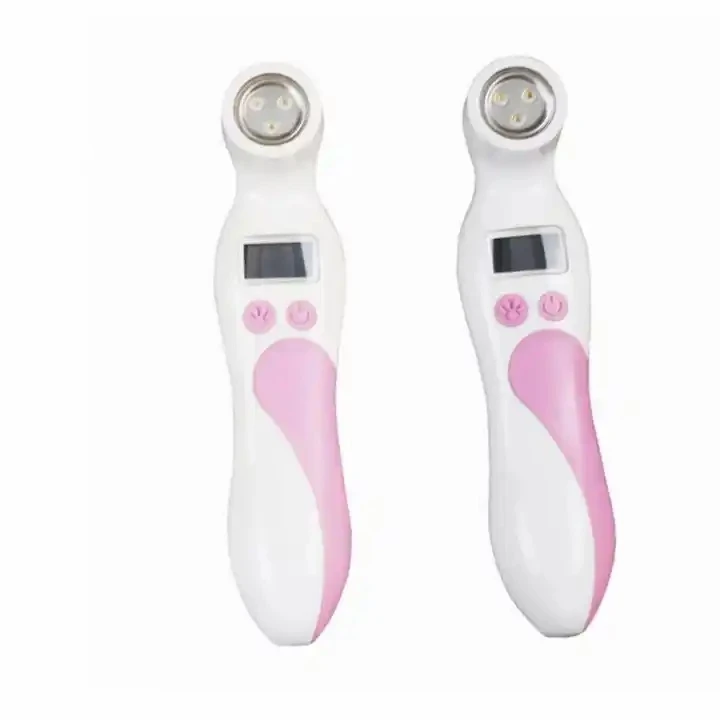
What is the Breast cancer detection device working principle?
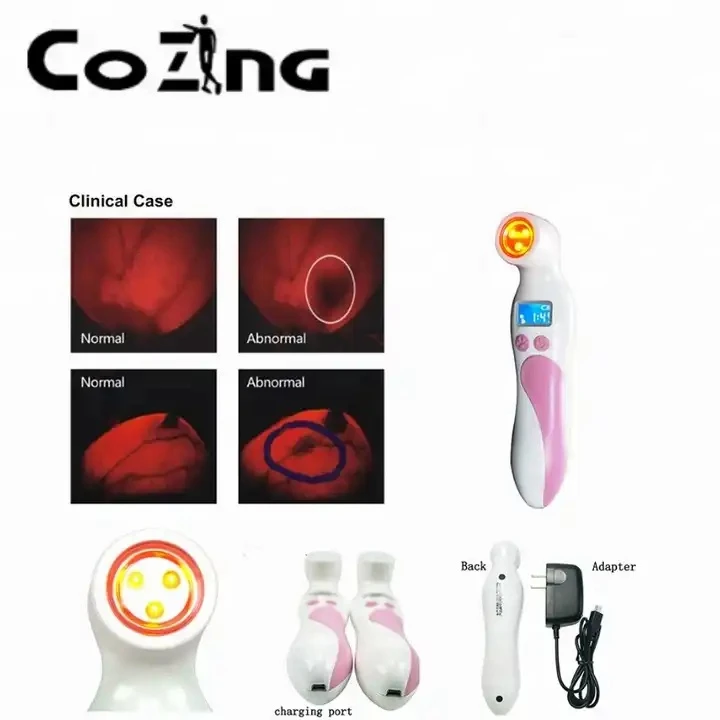
The red light can be absorbed by hemolgbin in blood vessels and the angiogenesis .Phenomenon of Abnormal cells proliferation it relies on the red light irradiation topenetrate most of the skin and help userclearly see the blood vessels within thebreast,the boundary distribution of vas withinthe breast and the depth of shadow,therebyperforming breast self inspection.
The Breast cancer detection device acutual clinical case :
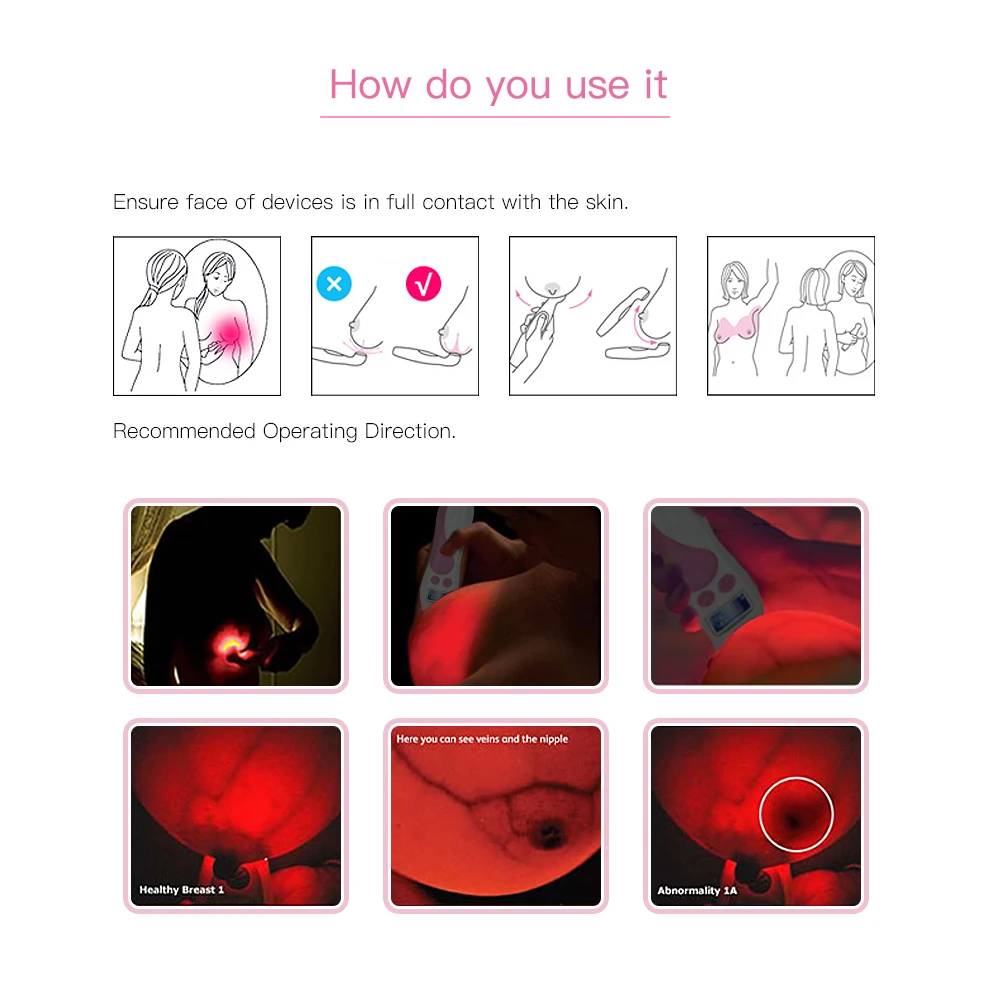
How to use the Breast cancer detection device ?
①Closely attach to the skin when using the scanner
②Recommended operating direction
③Close to the skin brightly
④Did not attach to the skin
The Breast cancer detection device tips:
①.DON`T use the scanner. When breast injury or breast skin is injured.
②.DON`T use the scanner when you are allergic to the plastic products.
③ The examine results will be difference according to the various body , please compare the results with yourself.
④Please inspect once a month, each time within 7 to 10 days after the EMMENIA.
What is the breast cancer symptoms?
In its early stages, breast cancer usually has no symptoms. As a tumor grows, you may notice these signs:
①. Lump in your breast or underarm.
A lump in your breast or underarm that doesn’t go away after your period. This is often the first symptom of breast cancer. Lumps associated with breast cancer are usually painless, although some may cause a prickly sensation. Lumps are usually visible on a mammogram long before you can see or feel them.
②Swelling in the armpit, collarbone, or breast.
Swelling in your armpit or collarbone could mean breast cancer has spread to lymph nodes in that area. This swelling may come before you feel a lump, so let your doctor know if you notice it. Swelling in your breast might signal an aggressive type of cancer called inflammatory breast cancer.
③Pain or tenderness in your breast.
Although lumps are usually painless, pain or tenderness can be a sign of breast cancer.
④ A flat or indented area on your breast.
This could be a tumor that you can’t see or feel.
⑤Breast changes.
You might notice a difference in the size, contour, texture, or temperature of your breast.
FAQ