
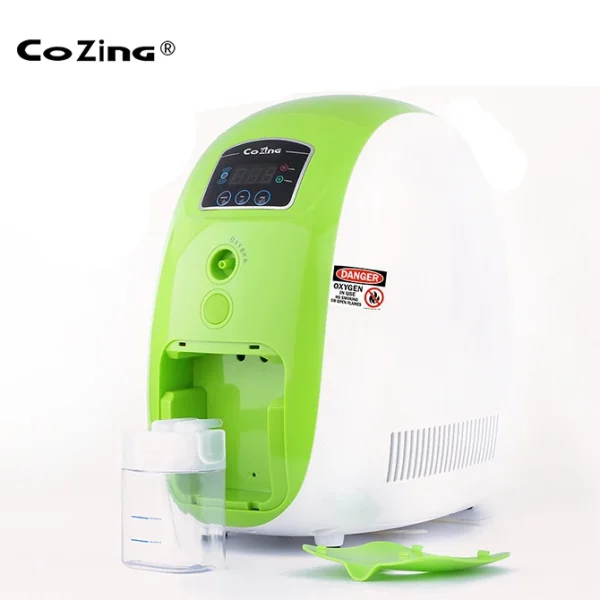
What are the indications of lightest oxygen concentrator?
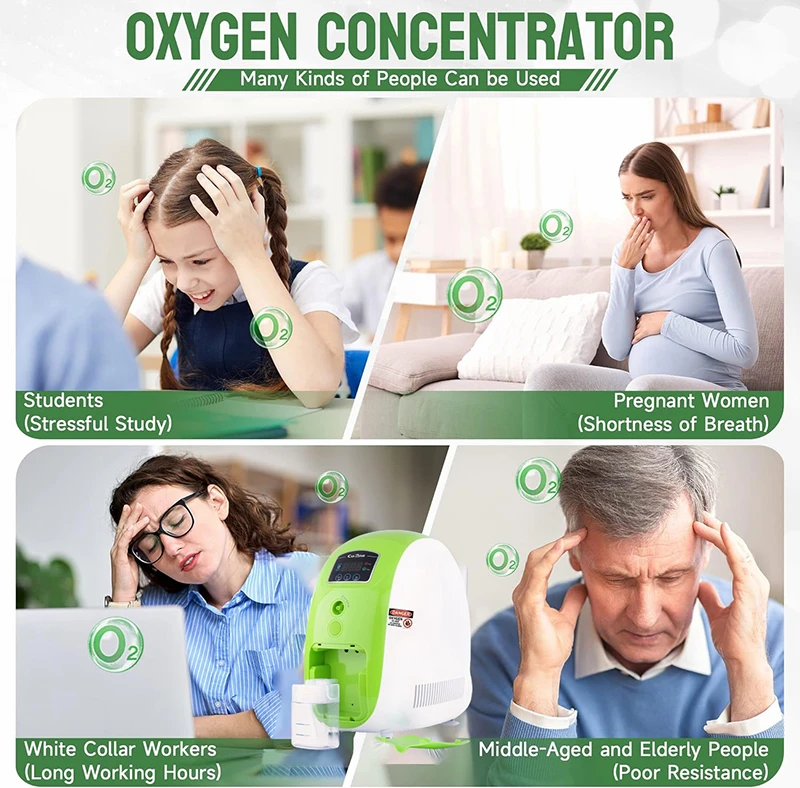
- Beneficial to the women and helpful to fetus development
- Improving immunity, preventing disease, oxygen therapy.
- Skin care, maintenance skin nutrition and elasticity and reduction of sub-health status
- Improving remembrance, refreshing and reducing mental fatigue.
What’s the technical parameter of the lightest oxygen concentrator?
|
Name |
home use oxygen concentrator work for Family Use 1-7L,Home Machine for Home and Car Travel trip |
|
Voltage/Frequency |
220V±22V, 50Hz±Hz, 110V, 60Hz |
|
Power |
110W |
|
G.W |
6.5kg |
|
Oxygen flow rate |
1-5L/Min can be adjusted |
|
Oxygen concent |
>94% (under 1L oxygen flow rate) |
|
Noise |
≤45dB |
|
Dimension |
358mm(L)*321mm(W)*231mm(H) |
|
Oxygen generat method |
PSA |
|
Storage conditions |
Temperature-40°C-55°C, humidity<80% |
|
Oxygen density |
> 90% |
|
Atmospheric pressure |
50kPa-106kPa |
|
Oxygen purity |
Range from 30%-90% |
How does the lightest oxygen concentrator work?
The working principle of the oxygen generator mainly uses air separation technology to separate nitrogen (N2) and other impurities in the air through physical and chemical methods, thereby providing high concentration of pure oxygen 1. First, the air is compressed at high density and then the different condensation points of each component in the air are used to separate gas and liquid at a certain temperature, and then distilled to separate it into oxygen and nitrogen. Under normal circumstances, because it is mostly used to produce oxygen, people are accustomed to calling it an oxygen generator.
What are the advantages of lightest oxygen concentrator?
1. Completely physical rich oxygen supply. much safer, more environmentally and health-friendly.
2. Fully filtrate harmful substances in the air, such as dust, virus, and bacteria, and refresh the air with rich oxygen, environmentally and health-friendly.
3.Concise film button, simplified operating procedure, Convenient nasal breathing apparatus.
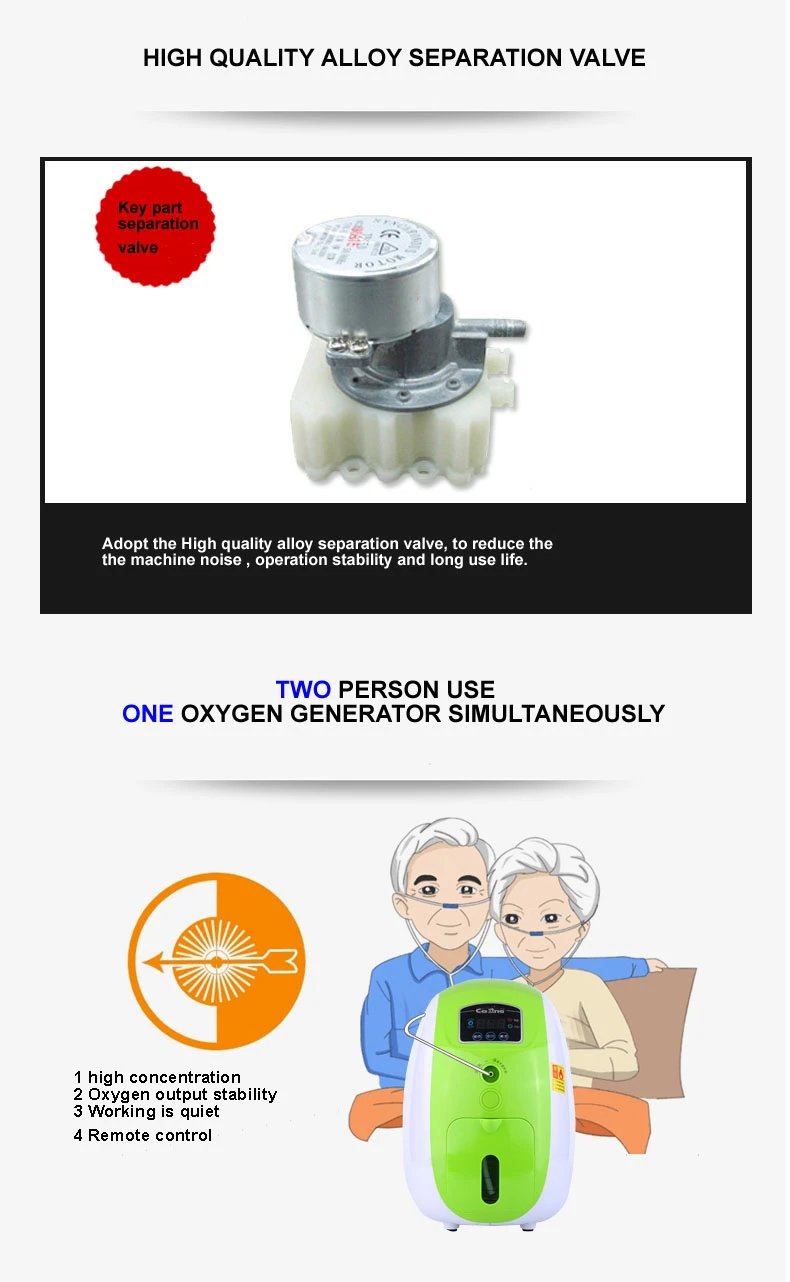
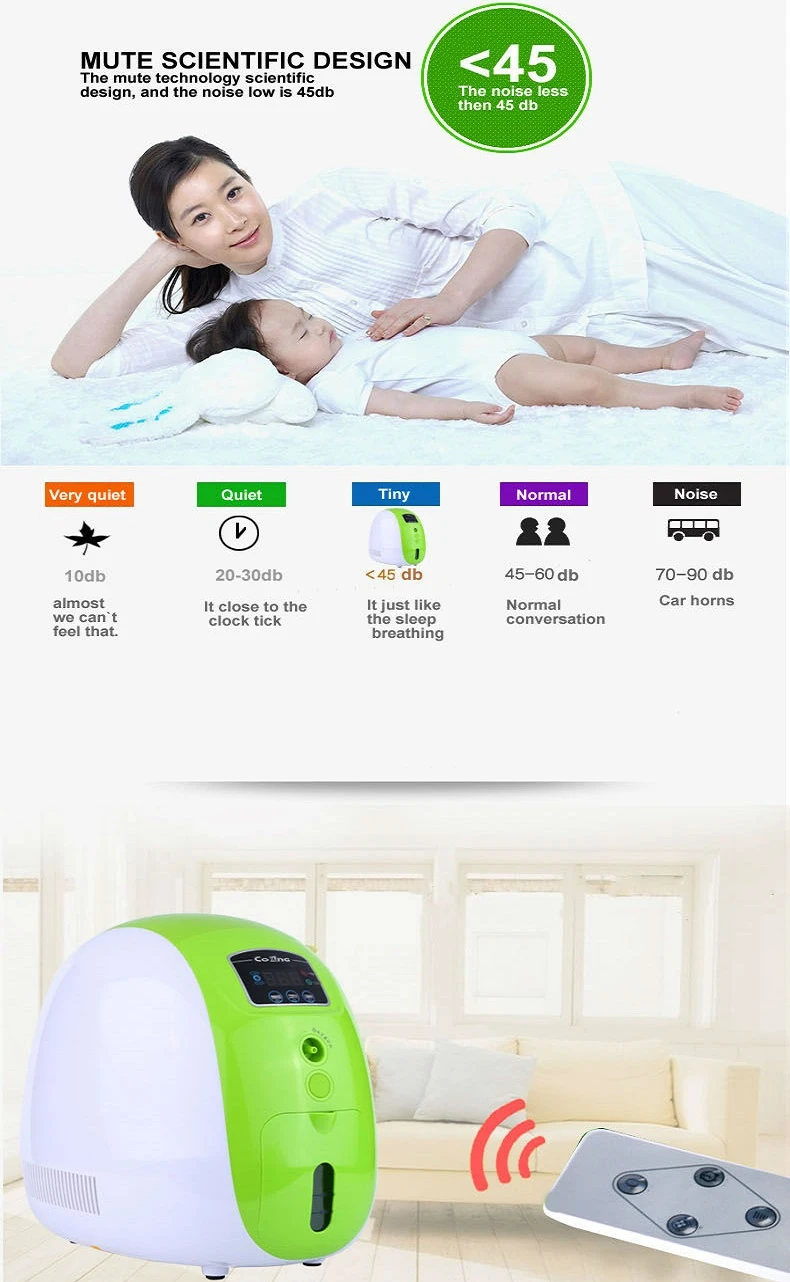
4. Low noise, mute motor, physical oxygen generation.
5. Safely broad-spectrum, oxygen concentration satisfying varied demands
6. Portable and light, most cost effective source of oxygen therapy
7. Ergonomic Design, harmonious airflow, specialized chargeable battery and charger, suitable for traveling and household use.
8. CE Certification, ISO9001 Quality Certification
product display:
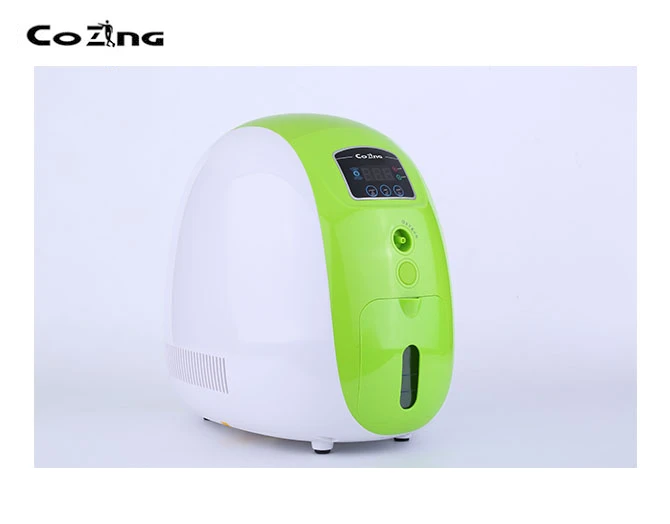
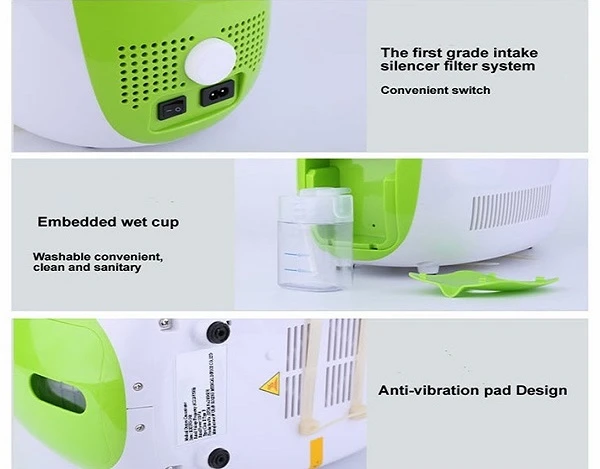
COZING-OX01 lightest oxygen concentrator Clinical study:
BACKGROUND:
Supplemental oxygen is designed to increase alveolar PO2 to aid in its diffusion into arterial blood. Typically, oxygen is supplied via nasal cannula either in a continuous or pulsed flow. Portable oxygen concentrators (POCs), which are battery-operated, support mobility in patients with exertional hypoxemia. In the U.S., the Food and Drug Administration (FDA) approves these devices for sale by prescription. Recently, however, cheaper devices marketed as POCs have appeared online, sold without FDA clearance and available over the counter (OTC) without a prescription. This study aimed to assess whether a selected group of OTC POCs have suitable oxygen delivery characteristics for hypoxemic patients.
METHODS:
Using a metabolic simulator capable of mimicking various metabolic rates and minute ventilations, the effects of oxygen supplementation from different devices on alveolar PO2 were measured. The devices tested included three OTC POCs, an FDA-cleared POC, and continuous-flow oxygen from a compressed cylinder. End-tidal PETO2, an indicator of alveolar PO2, was measured at each device’s flow settings across three metabolic rates.
RESULTS:
Continuous-flow oxygen from the tank showed a linear increase in PETO2 as flow increased, with a decreasing rate of increase at higher metabolic rates. The prescription POC demonstrated similar PETO2 elevations, with slightly lower increases in pulse-dose mode. One OTC POC, although technically portable, lacked an on-board battery and provided only modest PETO2 increases that did not improve with higher flow settings. Another OTC POC resulted in minimal PETO2 elevation. The third OTC POC, the COZING-OX01, a pulsed-dose device, produced significant PETO2 increases, though not to the extent of the prescription device.
CONCLUSIONS:
Of the three OTC POCs tested, only one showed potential utility for patients needing ambulatory oxygen. Physicians and respiratory therapists should advise patients requiring portable oxygen that OTC devices may not adequately meet their oxygenation needs.
FAQ